
A will is one of the most important legal documents you will ever sign, yet many Canadians put it off. Without one, the government decides who inherits your property, who looks after your minor children and who manages your affairs. This guide explains how wills and estates work in Canada, what happens without one, and how to make sure your wishes are respected.
What Is a Will and Why Does It Matter?
A will, also called a last will and testament, is a legal document that sets out how your estate is distributed after you die. Your estate is everything you own at death, including property, savings, investments, vehicles and personal belongings. A will lets you name an executor to carry out your instructions, choose who receives your assets and appoint a guardian for young children.
What Happens If You Die Without a Will?
In British Columbia, the Public Guardian and Trustee can take over an estate for a fee when no family member can or will act. Dying without a valid will is called dying intestate. Provincial and territorial law then decides who inherits, usually starting with a spouse and children and moving outward to other relatives. Because there is no executor, someone must apply to the court to administer the estate. The result can be slower, costlier and very different from what you would have chosen.
Types of Wills in Canada
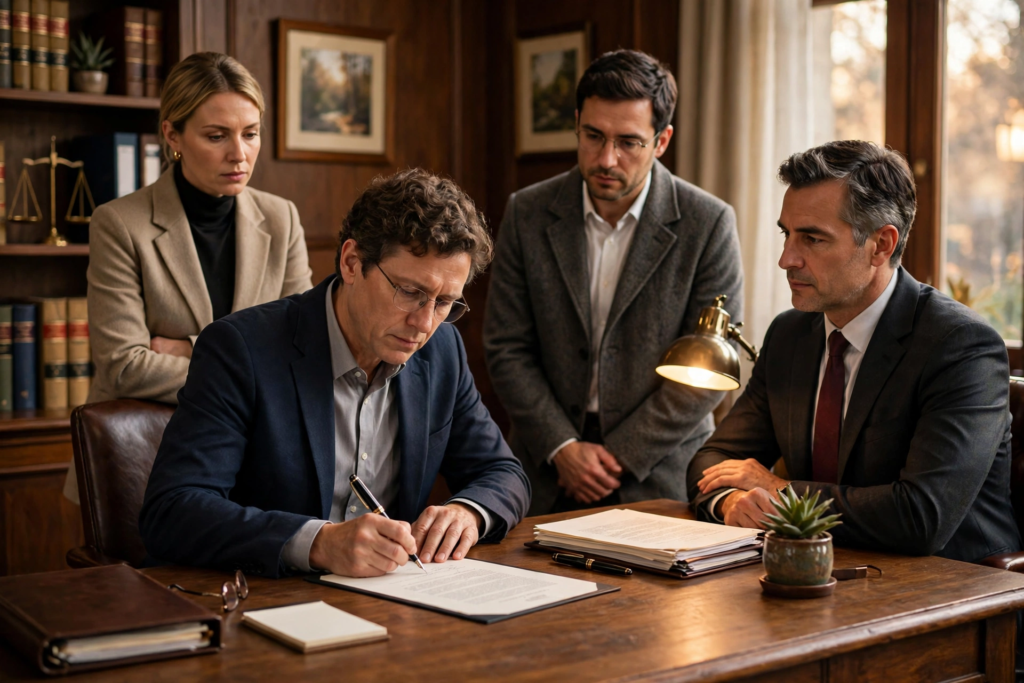
- Formal (attested) will. Typed or printed, signed by you in front of witnesses who are not beneficiaries. Witnessing rules vary by province, so a lawyer usually prepares this type.
- Holograph will. Written entirely in your own handwriting, signed and dated. Some provinces accept them, but others do not, and mistakes often lead to disputes, so treat them as a last resort.
- Notarial will (Quebec). Drawn up by a notary in Quebec’s civil law system. It is registered by the notary and does not need to go through probate.
What to Include in Your Will
- An executor, plus a backup, who is trustworthy, organized and willing to serve.
- Beneficiaries, including who receives specific gifts and who receives the remainder (the residue) of the estate.
- Guardians for minor children, and instructions for how money left to them should be managed.
- Funeral wishes and instructions for pets, digital accounts or business interests, where relevant.
Probate: What It Is and What It Costs
Probate, called “estate certificate” or “letters probate” depending on the province, is the court process that confirms a will is valid and gives the executor authority to deal with assets. Banks and land registries often require it before releasing funds or transferring property. Fees differ widely across the country. Based on 2026 figures from published provincial summaries:
- Ontario: The Estate Administration Tax charges no tax on the first $50,000, then 1.5% of the estate value above that.
- British Columbia: nothing on the first $25,000, 0.6% on the next $25,000, and 1.4% on value above $50,000.
- Alberta: a flat-fee schedule that tops out at $525 for estates over $250,000.
- Quebec: no fee for a notarial will, while other wills require court verification with filing costs.
Rates and thresholds change, so confirm current figures with your province or an estate lawyer before you plan around them.

Ways to Reduce Probate Costs
Some assets pass outside the will and may avoid probate, including property held in joint ownership with right of survivorship and registered accounts with a named beneficiary, such as an RRSP, RRIF or TFSA. These tools can help, but each has legal and tax consequences, and joint ownership can create problems of its own. Get advice before changing how you hold assets.
Can a Will Be Challenged?
Yes. A will can be contested on grounds such as lack of capacity, undue influence, fraud or improper signing. In most provinces, spouses and dependants can also ask a court to vary a will that fails to provide for them adequately. A clearly drafted, properly witnessed will that reflects thoughtful planning is far harder to challenge.
When Should You Update Your Will?
Review your will every few years and after any major life event, including marriage, separation or divorce, the birth of a child, a death in the family, a move to another province, buying a business or a significant change in your finances. Marriage and divorce can change how a will operates, and the rules vary by province, so do not assume an old document still works.

Do You Need a Lawyer?
Do-it-yourself kits and online services are cheaper, and they may suit a simple estate. But a lawyer, or a notary in Quebec, can catch problems you may not see, such as blended families, a business, out-of-province property or beneficiaries with special needs. Many offer fixed fees for straightforward wills, which is a modest cost compared with a contested estate.
Final Thoughts
Writing a will is an act of care for the people you leave behind. It gives your family clarity, protects your children and can save time, stress and money. If you do not have a will, or yours is out of date, now is the time to speak with an estate lawyer in your province.
This article is general information for Canadian readers and is not legal advice. Wills, probate rules and fees differ by province and territory and change over time.